
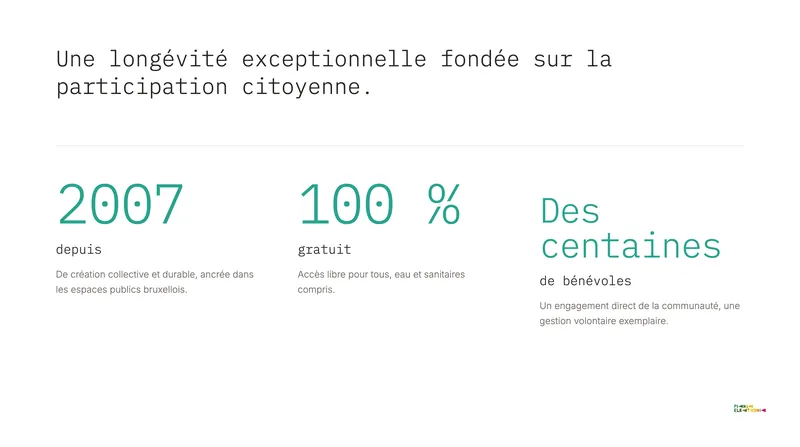
Piknik Elektronik is a citizen project born in 2007, alongside its night-time counterpart, Zukunft, and led by women artists. They have played all over the world, yet chose to put this project first, to bring people together and build a more caring society. The first Open Air ever held in Brussels, at weekends: free, inclusive and uncompromising, designed as a tool for social cohesion. A relaxed setting, with no barriers or fences, where everyone brings their own picnic and all kinds of connections are made, often unexpected, as feedback from the ground confirms year after year.
Since 2025, the executive of the City of Brussels has been granting us fewer and fewer dates and venues. We keep fighting for Piknik Elektronik to hold its place.
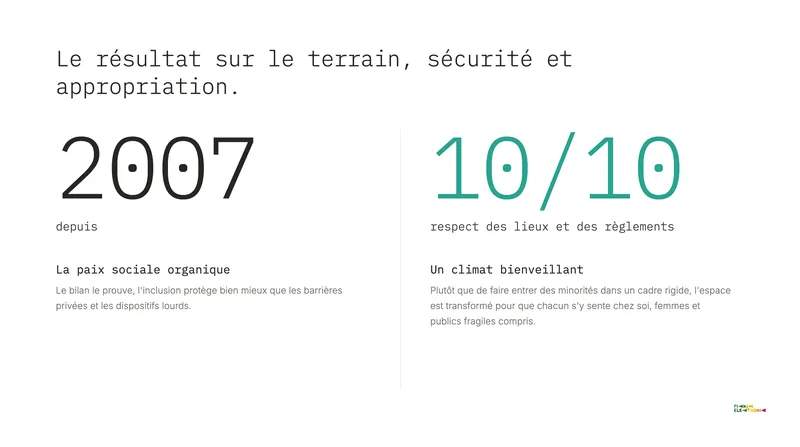
- since
- 2007
- events
- +200
- visitors
- +260k
- respect for places and rules
- 10/10
Who we are
In an open space, inspiring music invites passers-by to gather. The picnic tradition comes back to life, with friends or family, in a warm and relaxed atmosphere.
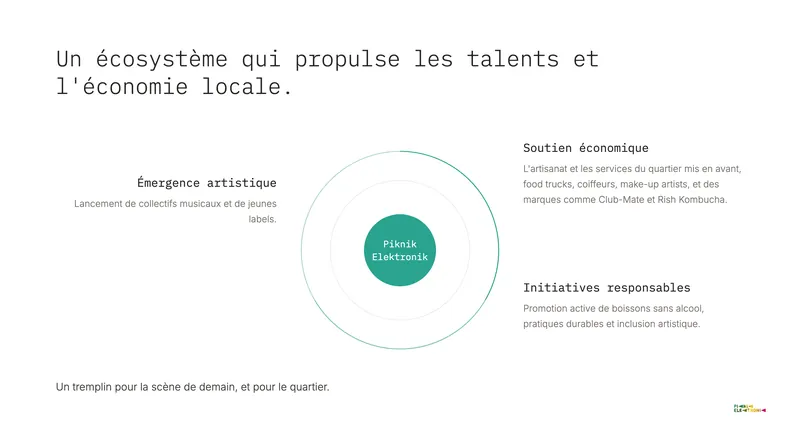
A sharp line-up. We spot new trends very early, at every level: many of the artists we have invited went on to become international headliners, such as Max Cooper, Kollektiv Turmstrasse, Rone, Parra for Cuva and many more.
Playful, educational and artistic, computer and science workshops share what we are passionate about.
Piknik Elektronik also travels, to London or Ghent, and celebrates its 20th anniversary in 2027.
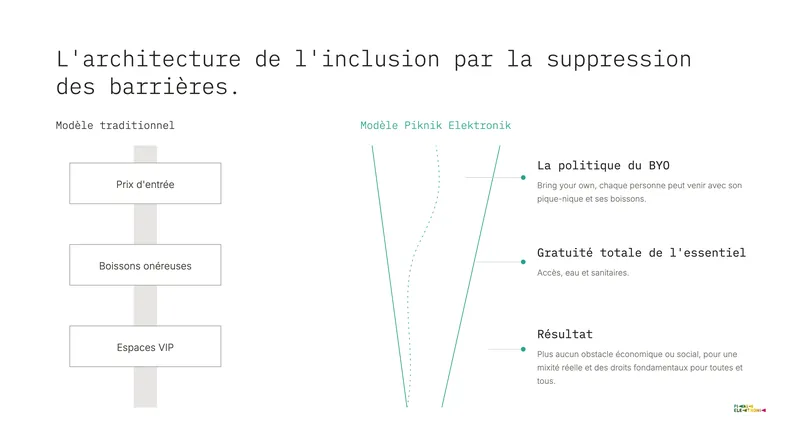
Beyond economic considerations, our choices are guided by the wish to bring down the invisible walls that separate us. That is the real magic we create, where connections flourish and creativity knows no limits.
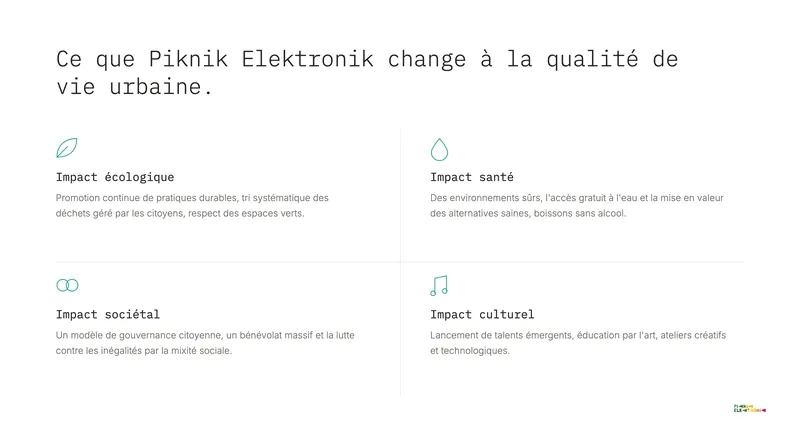
- Eco-responsibility
- Raising awareness of the environment and of respect: local and fair-trade products, sorting and recycling, zero waste, reusable cups and responsible consumption.
- Diversity
- Open to all cultures, all backgrounds and all ages, to foster unity and understanding.
- Equality
- Gender balance on stage, one note at a time, the fight against the under-representation of women and minorities in event professions, and a clear rejection of all forms of racism.
Going further
Our model
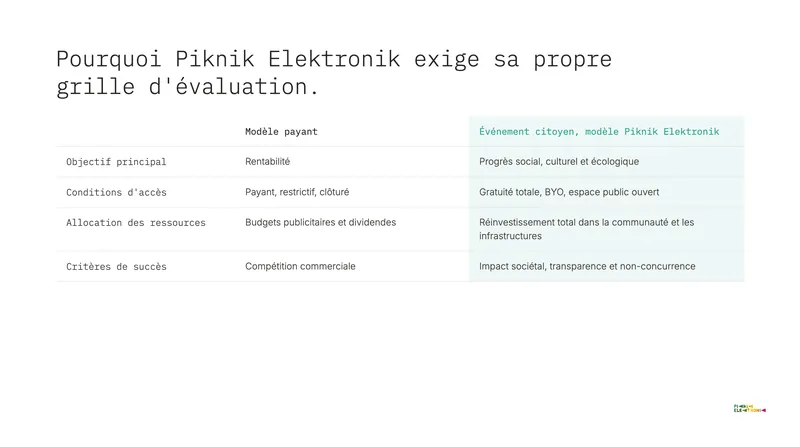
Shared benefits. Our Open Airs bring work to many suppliers, from logistics to sound, from cleaning to drinks, sometimes food trucks. Nearby shops, restaurants and cafés benefit too: that is often where people buy their picnic.
What funds us. The bar, our other parties, merch and the gigs we play elsewhere: everything is reinvested in Piknik Elektronik. Every drink helps.
Committed brands. We were pioneers in showcasing Club-Mate, Rish Kombucha and organic producers. No advertising on site.
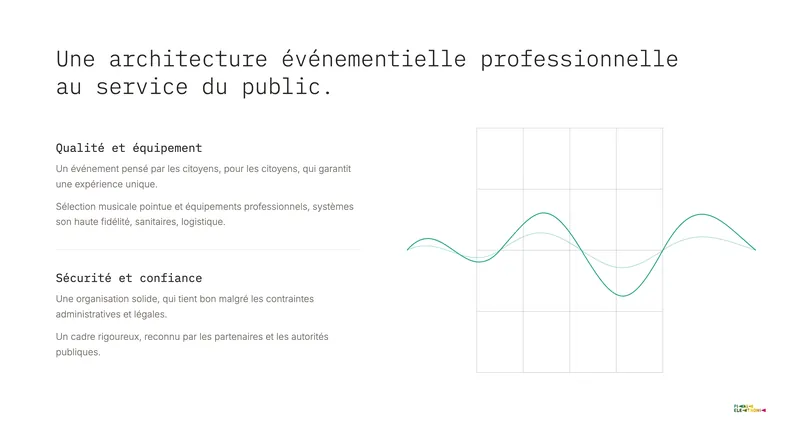
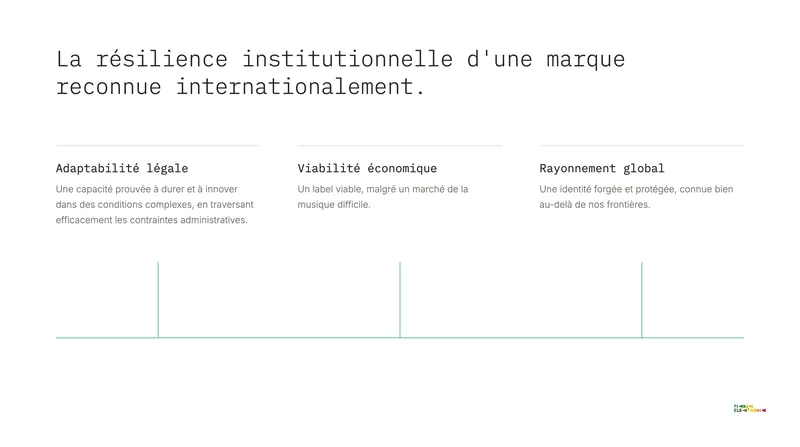
A professional organisation. Water, toilets, safety and a good welcome are a foundation, never a bonus. The team holds firm despite administrative constraints and maintains trust with partners and authorities.
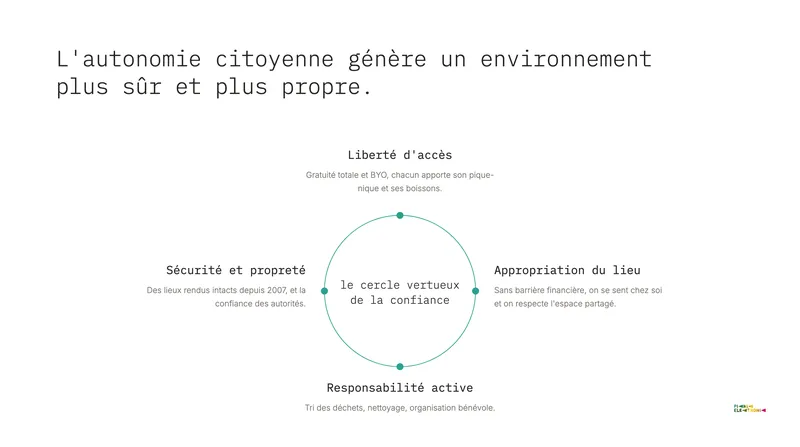
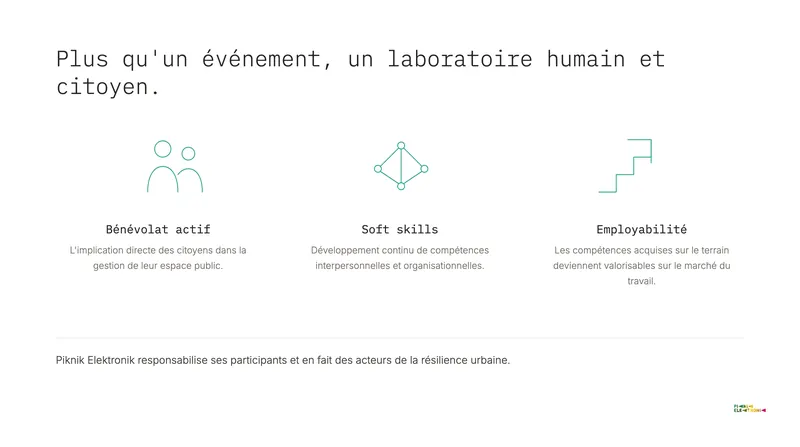
Hundreds of volunteers. They devote their weekends and summers to it, because an Open Air takes a whole year to prepare: admin, finding artists and suppliers, meetings and contacts, support parties, preparations and set-up, then the day itself. In doing so, they take ownership of public space and gain useful skills, all the way to the job market. Social ties and a sense of belonging grow stronger.
A cultural network. Zukunft parties and afterworks, Rumi, Piknik Scientifik with various guinguettes, full venues at Fuse, Bozar and The Nine, workshops and talks with Mérode. Hybrid formats, in support of an independent scene.
A long-standing collaboration. For almost twenty years, we have volunteered our advice to the City's non-profit on choosing artists and activities, and we co-programme some of its events to bring our audience to its projects.
What it brings
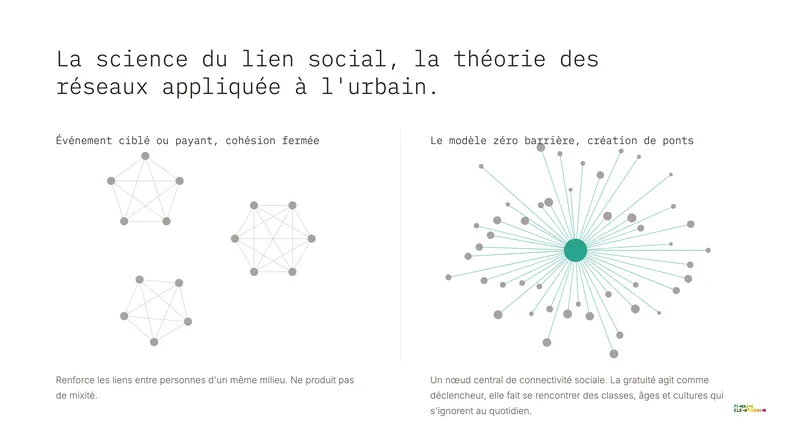
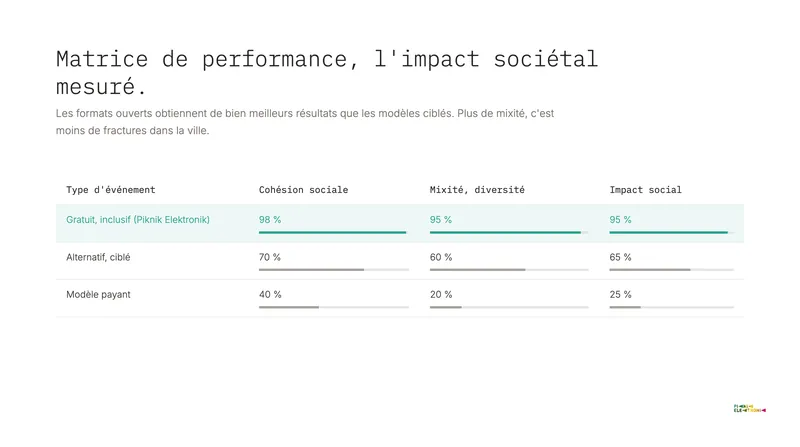
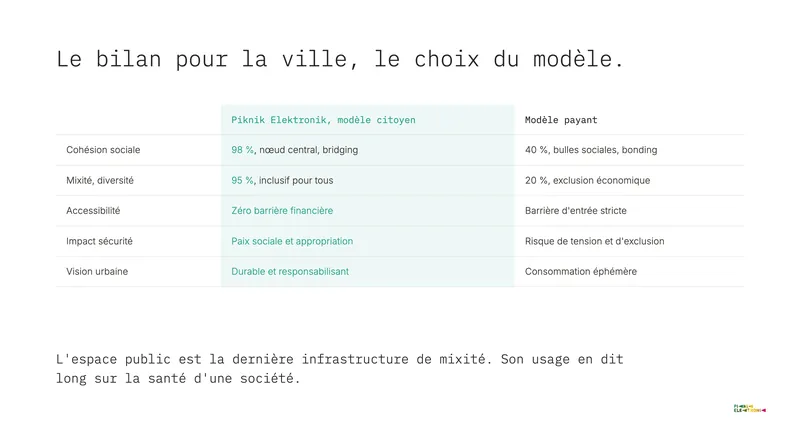
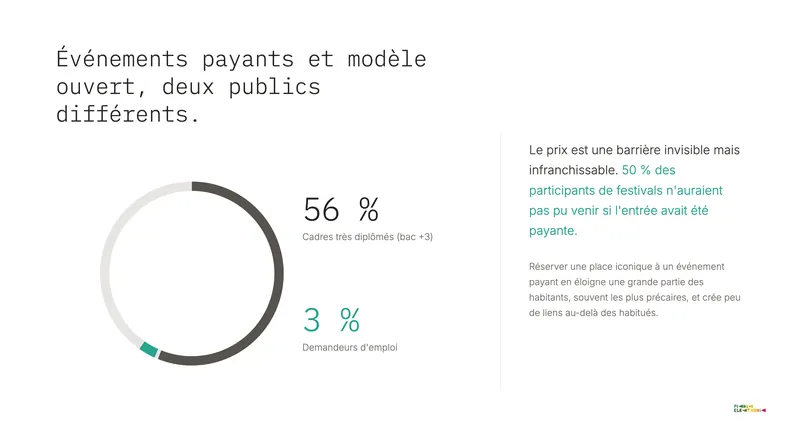
A real mix. Free access, with a high-level line-up, brings together audiences who do not meet elsewhere. The mix is cultural, social and generational.
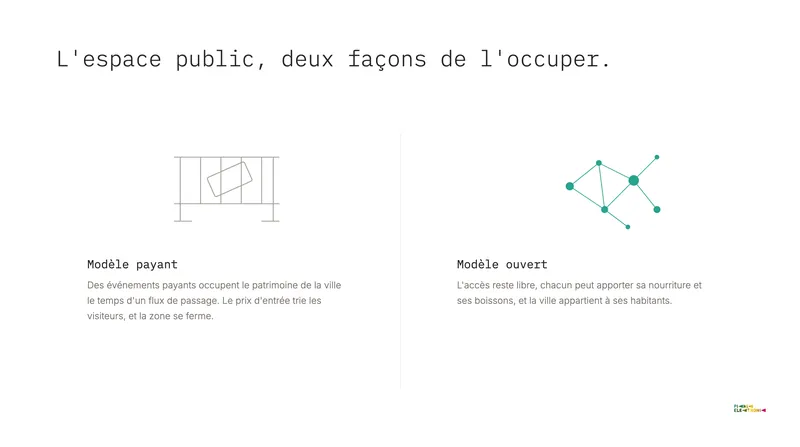
Iconic places that stay alive. Poelaert, the Bois de la Cambre and the large parks and squares are common goods, not grounds reserved for commercial events only. Opening them to all reduces social bubbles and makes the city more accessible.
Safety through trust. When everyone finds their place and looks after others, the atmosphere stays calm, and has done since 2007.
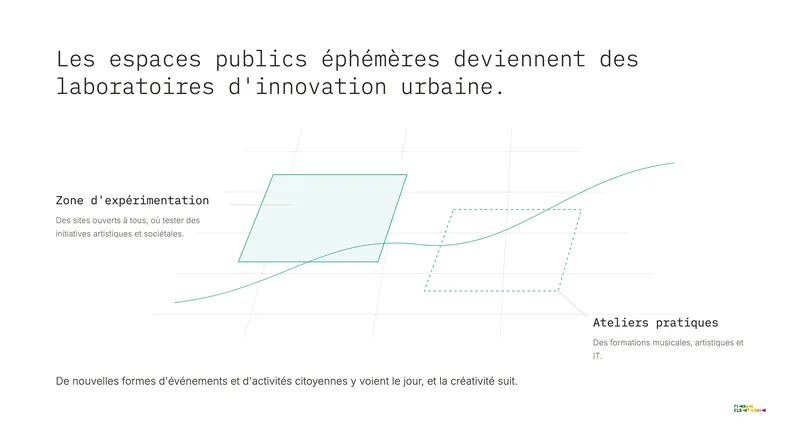
An urban laboratory. Temporary public spaces become a testing ground for new forms of civic, musical, artistic and technological activity.
An active community. More than 28,000 interactions on our social networks.
Piknik Elektronik also keeps the local economy turning.
The current situation
Getting a place in public spaces has always been an uphill battle, not least because permits are scarce and issued late. Since 2025, and despite everything the project brings, things have become much harder: the City executive refuses dates and moves our locations. At the same time, the most prominent sites go first to the City's non-profit and to paid events.
A fragile balance. A loyal audience, a quality line-up, a well-honed organisation: the model has proven itself. To stay economically viable, absorb the weather risk and keep suppliers stable, it needs at least 5 editions per season. Dropping from 8 to 1 or 2 puts it at risk, as does moving it away from the central places it has brought to life from the start: that means penalising success instead of building on it.
This fight has also allowed us to build strong ties with wonderful people, in the media, culture, networks, institutions and politics, from all sides. They have given us a great deal. The way the world is going shows more than ever how important it is to bring people together. We are documenting all of this and will share more soon.
Rather than aggressive marketing, we focus on encounters, in a space open to everyone.
Invisible walls fall more easily to music.
Contact us for a collaboration.
Write to us